What your skin is actually absorbing — and why I make my own massage butters from tallow, shea and herbs
Sometime in the last century, we decided that skincare should be a chemistry project.
Walk into any pharmacy and you will find moisturisers built from mineral oils derived from petroleum, emulsifiers developed for industrial applications, and preservatives engineered to extend shelf life to several years. Most of them are elegant in texture, beautifully packaged, and genuinely pleasant to use. And most of its benefits sit on the surface of the skin rather than being absorbed by it — because the skin is an intelligent barrier, and it does not particularly recognise what they are.
I make my own massage butters because I could no longer use anything else once I understood what the skin actually is, how it works, and what it was designed to respond to.
The skin is not just a surface. It is an organ.
It is the largest organ in the body — a living, breathing, sensing, eliminating, communicating system in constant dialogue with everything inside. It absorbs. It excretes. It manufactures vitamin D from sunlight. It regulates temperature, hosts an immune response, and provides the nervous system with an extraordinary quantity of sensory information every second.
Because it absorbs, what you put on it enters the body. Not all of it, not instantly, and not in the same way everything does — but the skin's permeability is not a design flaw to be overcome. It is a feature. Fat-soluble compounds in particular penetrate the dermis and enter the bloodstream with relative ease. This is the principle behind trans-dermal medication patches. It is also the principle behind every ingredient decision I make when I am formulating a product that will spend at least an hour in direct contact with a client's skin.
The question I ask of every ingredient is not does this feel good? It is: would the body recognise this?
Why tallow
Beef tallow — rendered fat from grass-fed cattle — has been used on human skin for as long as there are records of humans caring for their skin. It was displaced not because something better was discovered but because petroleum became cheap and abundant, and the cosmetics industry found it easier and more profitable to work with synthetic compounds than with the rendered fats that had served every previous generation.
The reason tallow works so well on skin is not folk wisdom. It is chemistry.
The fatty acid profile of tallow — predominantly oleic acid, palmitic acid, stearic acid, and conjugated linoleic acid — mirrors the fatty acid composition of human sebum more closely than almost any other fat available. The skin recognises it as compatible. Rather than sitting on the surface in an occlusive film, it is absorbed, it feeds the lipid barrier, and it leaves the skin genuinely nourished rather than merely coated.
Tallow rendered from grass-fed animals also carries the fat-soluble vitamins that the Weston A. Price research identified as the critical nutrients of traditional diets: vitamins A,D, E, and K2. These are the vitamins most depleted in modern life and most important for skin integrity, barrier function, and the cellular renewal that keeps skin resilient across the decades. Applied topically, they are absorbed directly where they are needed.
I use grass-fed tallow specifically because the nutrient profile is demonstrably different from grain-fed. The fat does not lie.
Why shea
Shea butter comes from the nut of the shea tree, native to West Africa, and has been used medicinally and cosmetically across that continent for centuries. Its fatty acid composition— high in stearic and oleic acid — complements tallow well, and it brings specific properties of its own.
Shea is rich in triterpene alcohols — compounds with documented anti-inflammatory, wound-healing, and UV-protective properties. It is one of the few plant fats that is genuinely non-comedogenic, meaning it does not block pores, which makes it appropriate for a wide range of skin types including sensitive and acne-prone skin. It melts at body temperature, which gives the butters their characteristic quality: solid in the jar, silky on the skin, absorbed without residue.
Together, tallow and shea create a base that is simultaneously nourishing, stable, and pleasant to work with. One brings biological familiarity — the skin knows what tallow is. The other brings specific therapeutic properties and textural elegance.
Why essential oils — and which ones
Essential oils are not primarily about fragrance. They are the concentrated volatile aromatic compounds of plants — the same compounds that give a lavender flower its scent also carry its antimicrobial, anti-inflammatory, and anxiolytic (deeply calming) properties. Because they are fat-soluble, they penetrate the dermis efficiently and enter systemic circulation within minutes of topical application. Aromatherapy that works only through inhalation is a fraction of what essential oil therapy actually is.
This is why I take the choice of essential oils in each butter seriously, and why I recommend clients allow a few hours — ideally overnight after an evening session — before washing them off. The oils keep working after the treatment ends. The skin is absorbing throughout that window.
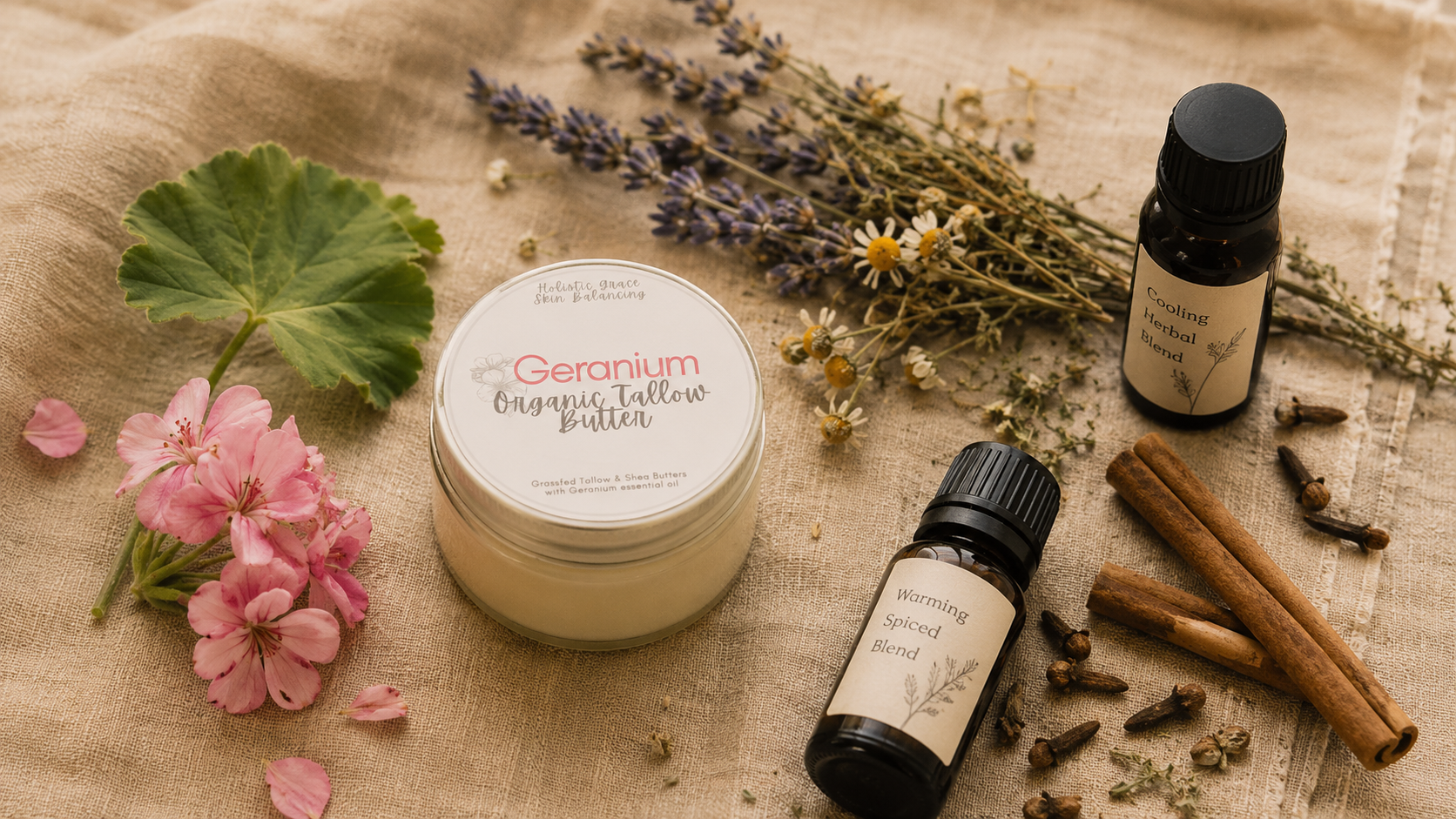
The geranium essential oil in my balm formulated for sensitive and pregnant skins brings mild lymphatic and circulatory support alongside a balancing, calming effect on the nervous system. Geranium is one of the few essential oils considered safe throughout pregnancy when used in appropriate dilutions — gentle enough for the most reactive skin, therapeutically meaningful enough to earn its place.
The cooling, herbal balm in my massage range — designed for work that needs to glide cleanly over large muscle groups — uses a blend chosen for its anti-inflammatory and analgesic properties: herbs that cool the tissue slightly, ease post-treatment tenderness, and leave the skin feeling clear and refreshed. It is the balm I reach for in warm months and for clients whose tissue runs hot.
The warming, spiced balm is a different intention entirely. Arrowroot powder gives it grip —essential for detailed work where the hands need to move slowly and specifically rather than glide. The warming essential oils in this blend stimulate circulation and ease deep muscular tension, making it particularly useful at the beginning of a session when the tissue is still cool and guarded, or for clients who carry chronic cold tension rather than inflammatory heat. My clients often remark that they can feel this one working long after the session ends — which is the point.
What clients notice
The most common feedback from clients after their first session with these butters is that they expected to feel greasy but strangely they don't. The skin feels nourished — actually different in quality to how it felt going in — but not coated or tacky. Tallow and shea absorb. They feed the skin rather than sitting on top of it.
I recommend to most clients that they allow two to three hours — or better, sleep on it —before showering after an evening session. This is not about the massage itself. It is about the continuing work of the essential oils absorbed into the dermis and entering systemic circulation, and about the genuine nutritional content of the butter having time to be taken up by the skin. The therapeutic window after application is real, and washing it away immediately shortens it unnecessarily.
For clients who prefer their sessions in the morning or at lunchtime, a light rinse is fine —the majority of absorption happens in the first hour.
What was known before we forgot
Weston A. Price spent years in the 1930s documenting traditional cultures whose diets had not yet been displaced by modern processed foods. What he found, consistently, was that the people who ate the most traditional fats — the butter, the organ meats, the rendered animal fats, the fermented dairy — had the most robust health: the strongest teeth, the most resilient immune systems, the clearest skin.
The same fats that nourished their bodies from the inside were the fats their ancestors applied to the outside.
There is a connecting thread to this that I find genuinely moving. The body was designed to interact with the natural world — to eat from it, to absorb from it, to be nourished by it at every level. The skin that recognises tallow is the same skin that benefits from the animal fats in the diet. The essential oils that penetrate the dermis are the same plant compounds that work therapeutically when consumed. The intelligence is consistent from the inside out.
What I make in my kitchen and bring to my treatment room is not a sophisticated modern innovation. It is, in the most literal sense, a return to the beginning.
The Holistic Grace range
The three butters I currently use and offer are formulated for different purposes and skin types — a gentle, nourishing blend for sensitive skins, pregnancy, oil cleansing, and hair care; a cooling herbal blend for large-muscle massage and warm-tissue work; and a warming, grip-focused blend for detailed release work and cold, guarded tissue.
All three begin with the same grass-fed tallow and shea butter base. All three use essential oils chosen for their therapeutic rather than merely aromatic properties. All are free from mineral oils, synthetic emulsifiers, artificial preservatives, and any ingredient I would not be comfortable using on my own skin.
Details and availability are on the shop page. I am still refining and naming the massage range — as any practitioner who formulates their own products will recognise, the work of getting something genuinely right takes longer than the work of getting something finished.
[View the Holistic Grace product range →]
✦ This week
From My Shelf
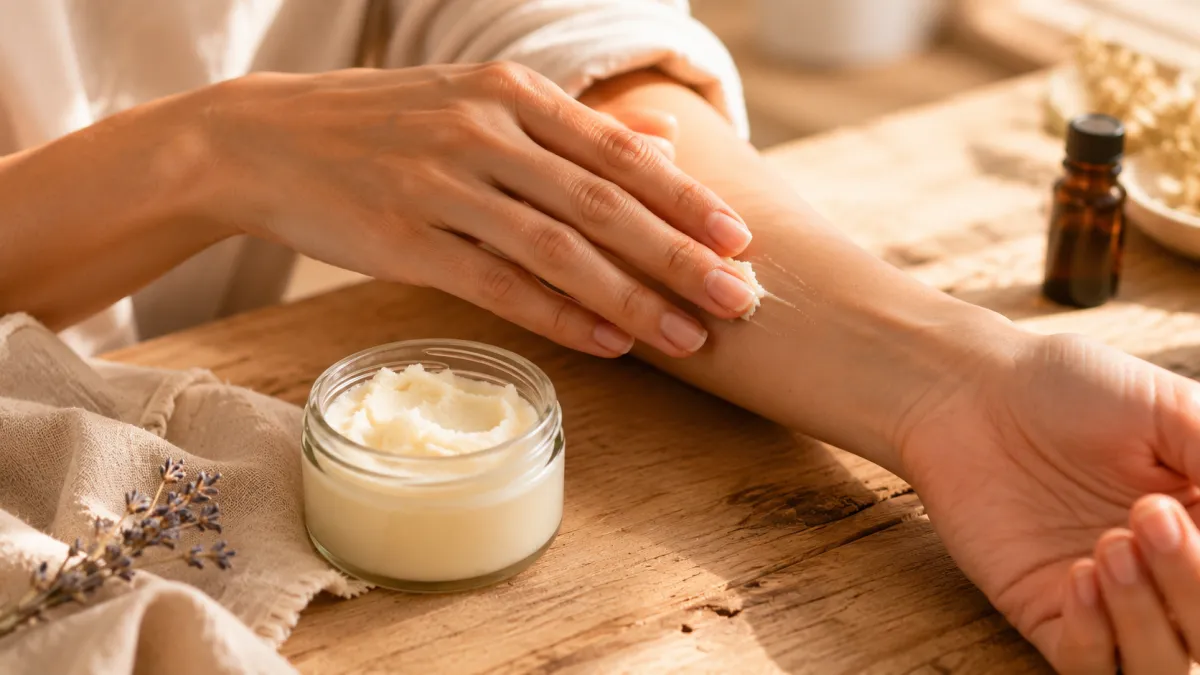
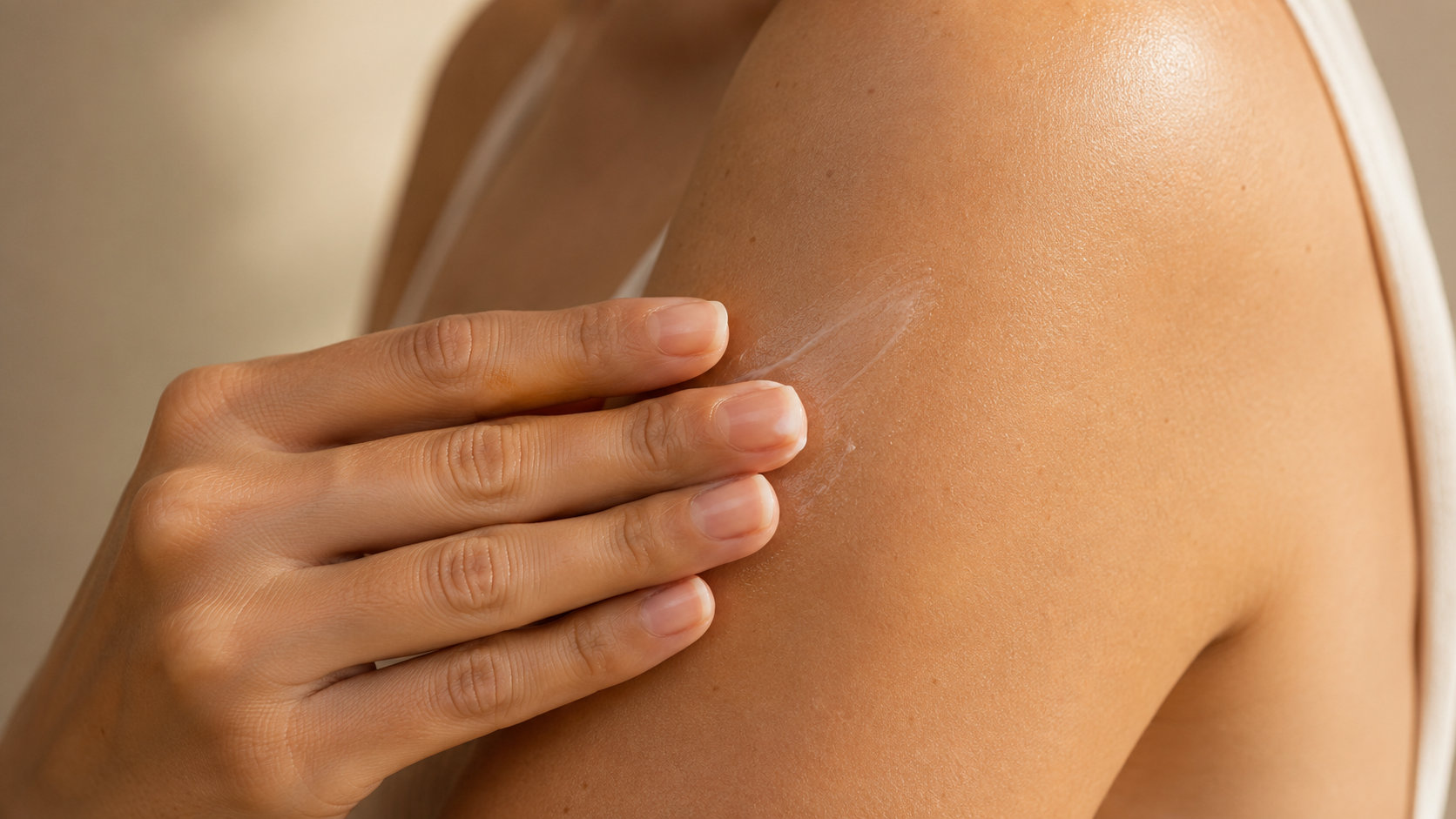
The tallow butter works best applied to skin that is slightly damp — just out of a bath or shower, before you dry off completely. Take a small amount, smaller than you think you need, and work it in with slow, deliberate strokes rather than a quick rub.
Then leave it. Resist the instinct to wipe or wash it off. The twenty minutes after application are the most active part of the process — fat-soluble compounds are moving through the dermis, essential oils are entering systemic circulation, and the skin is doing exactly what it was designed to do.
This week: try applying it before bed and sleeping on it. Notice the quality of your skin the following morning.
References and further reading
Price, W.A. (1939). Nutrition and Physical Degeneration. Price-Pottenger Nutrition Foundation.
Pappas, A. (2009). Epidermal surface lipids. Dermato-Endocrinology, 1(2), 72–76.
Blaak, J. & Staib, P. (2018). The interrelation of skin pH and skin flora and its impact on skin barrier function. Current Problems in Dermatology, 54, 1–10.
Akihisa, T. et al. (2010). Anti-inflammatory and potential cancer chemo preventive constituents of the fruits of Morinda citrifolia. Journal of Natural Products. (Re: triterpene alcohols in shea.)
Tisserand, R. & Young, R. (2014).Essential Oil Safety: A Guide for Health Care Professionals (2nd ed.). Churchill Livingstone.
Buchbauer, G. et al. (1991). Aromatherapy: Evidence for sedative effects of the essential oil of lavender after inhalation. Zeitschrift für Naturforschung.
Weston A. Price Foundation: westonaprice.org
This post is for educational purposes. It does not constitute medical or dermatological advice. If you have a diagnosed skin condition, are pregnant, or are under medical care, please consult your healthcare provider before introducing new topical products.